Use energy later
Store part of the available daytime generation for evening or other later demand.
Battery storage
Battery storage can add flexibility and, when specifically designed for it, support selected loads during an outage. The right setup depends on energy use, compatibility, space and backup priorities.
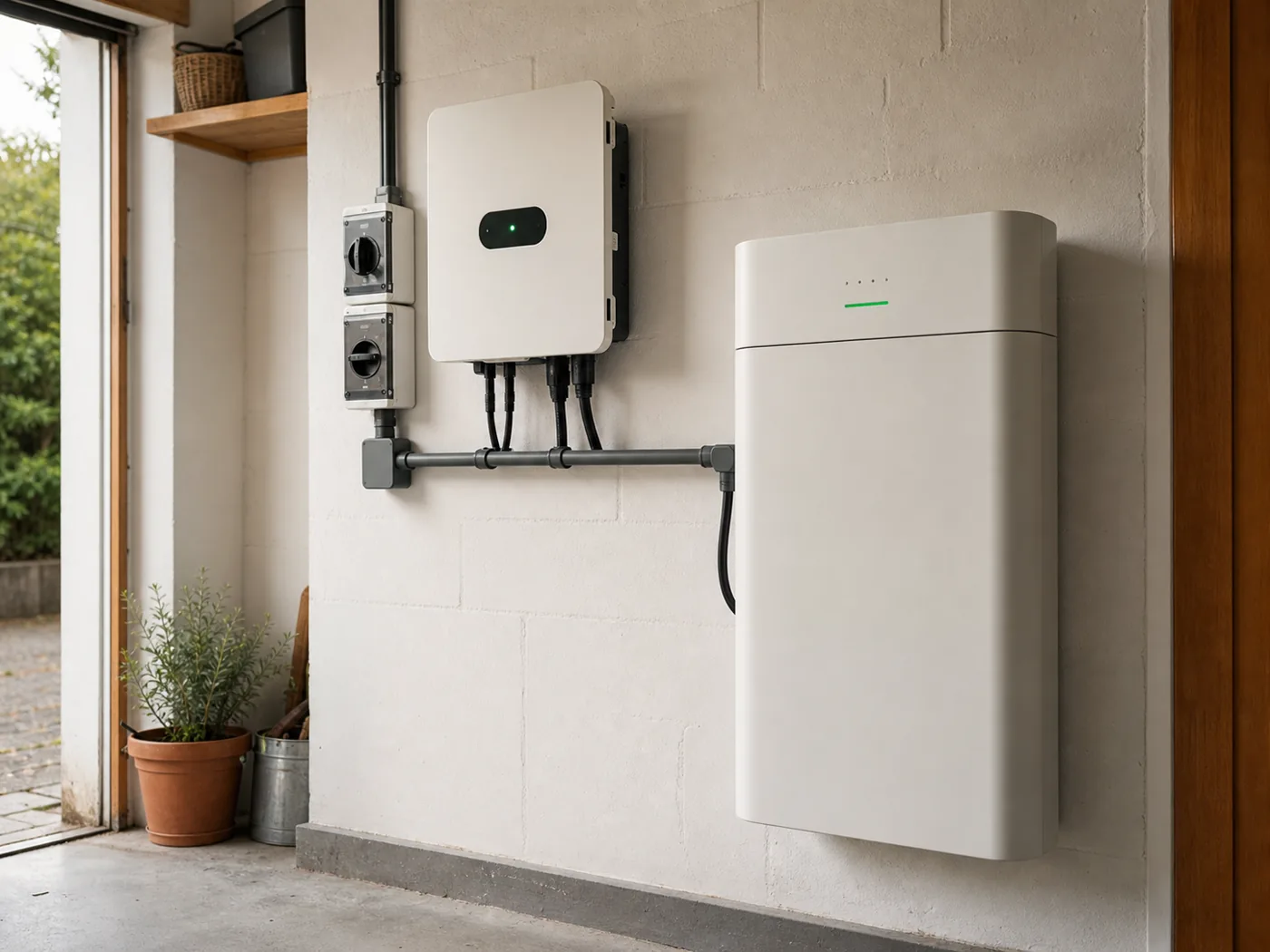
In plain language
During the day, the property can use solar generation directly. When generation is higher than immediate demand, a compatible system may charge the battery. Stored energy can then be used later according to the configured operating mode.
Backup power is not automatic for every battery. Circuits, power limits, transfer equipment and expected duration must be assessed.
How energy can move
Common goals
Store part of the available daytime generation for evening or other later demand.
Identify essential loads and design for verified backup behaviour where supported.
Check inverter, wiring, equipment space and approved compatibility before selecting a retrofit route.
Use compatible monitoring to understand generation, consumption, battery state and grid exchange.
What the assessment checks
Existing solar owners should share equipment labels, original documentation and monitoring screenshots where possible.
Assess storage optionsBattery questions
Suitability depends on usable area, orientation, shading, roof condition, structure, access and local requirements. A property assessment confirms what is practical before a system is recommended.
The recommendation should reflect verified electricity use, when that energy is consumed, available installation space, connection limits and future plans such as a battery, heat pump or electric vehicle.
Recent bills are one of the most useful starting points. They help establish consumption patterns and avoid basing a quotation on broad assumptions. [Confirm Preferred Number of Bills or Billing Periods].
Yes, subject to the property assessment. Offices, shops, warehouses, factories, farms and hospitality buildings can have very different operating hours, roof conditions and electrical demand, so each design must be matched to the site.
Often this can be planned, but compatibility is not automatic. The existing inverter, electrical design, available equipment space, backup goals and approved battery options should be reviewed before promising an upgrade path.
A battery may store part of the energy generated during the day for later use and may support selected loads during an outage when designed for backup. Actual behaviour depends on the chosen system, electrical loads and operating settings.
[Confirm EV Charger Installation Service]. The assessment should consider charger power, electrical capacity, parking location, cable route and whether solar-aware charging is required.
Storage assessment
Share existing system details, electricity use, equipment photographs and the loads that matter most.